
The use of PCB is common in different electronics, right? They help keep different small components aligned in a single place. These PCBs come in different types. These types of PCBs differ from one another in many respects. Among those types, the debate between single-sided vs double-sided PCBs is prevalent.
Many people favor double-sided PCBs for their improved performance. However, single-sided PCBs are affordable and simple, which makes them a decent option. In this article, I will discuss the key differences between these two PCB types. After reading this, you’ll know which of these two PCBs is the best option for you. So, let’s get started.
What are Single & Double Sided PCBs?
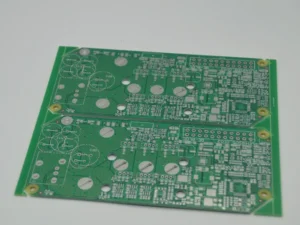
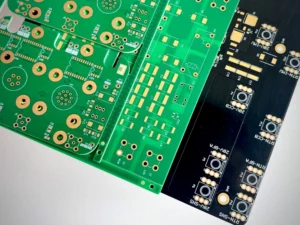
Холост и двусторонние печатные платы are the two most common types of PCB. A single-sided PCB has a conductive copper layer on only one side of the board. On the flip side, a double-sided PCB has copper layers on both sides. These copper layers act as pathways for the flow of electrical signals.
Both of these PCB types are reliable in their own way. For example, the single-sided PCB is known for its simple design and cost-effectiveness. There is no complex connection system, but only one layer of copper on one side. That’s why it is used mainly in basic electronic products that do not require many connections.
However, as devices become more advanced, they cannot work with single-sided copper pathways. They need more complex connections and more pathways. That’s where the double-sided PCBs come in handy, which are very advanced forms. They have copper pathways to both sides of the board. This gives engineers more space to design complex circuits without increasing the board’s size.
Differences Between Single-Sided PCB and Double-Sided PCB
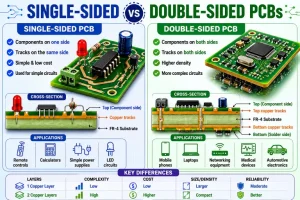
There is no doubt that both single and double sides perform the same basic function. They connect electronic components and transfer electrical signals. But when you look more closely, you will see that they differ significantly in several respects. These differences affect their choice of distinct projects. To help you understand it, I will compare the two PCB types head-to-head.
1- Number of Conductive Layers & Circuit Complexity
The major difference between single- and double-sided PCBs is the number of conductive layers they have. Generally, as the name suggests, односторонние печатные платы have only one copper layer on one side. It means all electrical pathways must be created on one side of the board. This automatically decreases the circuit complexity and makes it very simple to use and operate.
On the flip side, double-sided PCBs contain copper layers on both sides of the board. You have the flexibility to create electrical connections on both sides, not just one. This makes the entire system more organized and provides more room for electrical signal flow. But those multiple copper layers enhance the overall complexity of the PCB.
2- Available Routing Space & Component Density
Routing space is the area used to create copper pathways on a PCB. However, component density refers to how many components can fit on the PCB. So that’s another area where both single-sided and double-sided PCBs differ. As you know, in a single-sided PCB, all the copper pathways are created on one side. It means only one surface is available for connection, which limits the routing space.
Eventually, there will not be enough space to add more components, reducing component density. On the other hand, a double-sided PCB has more routing space because it uses both sides of the board. You can create electrical pathways on both the top and bottom sides. This extra space makes it easier to add more parts to the same-size board without overcrowding the PCB (i.e., higher component density).
3- Electrical Connections & Manufacturing Complexity
In a single-sided PCB, all electrical connections are made on one side of the board. Why? Because there is only one copper layer. The electricity will travel through pathways on that single side. That’s why manufacturers do not need to connect multiple layers. This makes the PCB simple to design and produce.
However, in a double-sided PCB, copper layers are present on both sides of the board. Sometimes an electrical signal needs to travel from the top to the bottom. To make this possible, small holes are created in the PCB. These holes act like tiny bridges that connect the two sides. Due to this complexity and more connections, it takes time and effort to manufacture. Manufacturers have to test and design carefully to ensure everything works properly.
4- Design Flexibility & Performance Capabilities
How easily engineers can arrange the circuit on the board is design flexibility. The number of functions and tasks the PCB can support is its performance capabilities. Both single-sided and double-sided PCBs vary in this term. How? In a single-sided PCB, only one copper layer is available. All components and electrical paths have to fit on that one side.
It means there is limited space to work with, which limits the design flexibility. But when it comes to a double-sided PCB, the copper layer is on both sides. Now engineers have more space to arrange components and pathways. If one side is crowded, they will use the other side of the PCB, which gives them more flexibility. This enhances PCB performance for complex connections and devices.
5- Typical Applications & Best Use Cases
Due to variations in several aspects, the usability of both double-sided and single-sided PCBs varies. The single-sided PCBs are simple with fewer connection options. That’s why they are commonly used in.
- Калькуляторы
- Светодиодные осветительные приборы
- Пульты дистанционного управления
- Источники питания
- Электронные игрушки
- Simple household appliances
- Базовые датчики
- Цифровые часы
On the flip side, double-sided PCBs are known for their complex yet effective design. They are more advanced and efficient in their performance. That’s why you will often find them in.
- Смартфоны
- Медицинское оборудование
- Автомобильная электроника
- Промышленные системы управления
- Оборудование связи
- Компьютерное железо
- Охранные системы
- Аудио и видео устройства
- GPS и навигационные системы
6- Production Cost & Overall Affordability
Lastly, regarding production cost and affordability, double-sided and single-sided PCBs differ. As I said above, a single-sided PCB has a simple structure. There is only one copper layer that is much easier to manufacture, design, and test. That means it uses a few readily available materials, which reduces the overall production cost. Due to all this, single-sided PCBs are very affordable for simple electronic devices.
However, double-sided PCBs are not that easy to manufacture. During their production, strict quality control, testing, and high-quality materials are used. Also, it contains more copper layers that must be carefully inspected. All this ultimately increases the overall cost of these PCBs. However, this higher cost compensates for advanced devices that require complex connections.
Заключение
Let’s conclude: Whether you should choose a single-sided or double-sided PCB depends on your use case. However, I consider double-sided PCBs a superior option for most applications. Why? The reason is that these PCBs are very flexible and offer more space to work with. They come with copper wiring on both sides, which makes them a more practical and usable option.
However, someone with a tight budget can choose a single-sided PCB. The reason is that this PCB type is a good starting point. Remember, you will have less space for component placement, so you’ll have to compromise. In this article, I discuss the major differences between these PCB types.