
In every country, taxes and tariffs must be determined when importing or exporting products. The tax or tariff rates can vary depending on the type of product. In this case, the HS code system is used to correctly identify each product. The HS Code for PCBA is specifically used to identify PCBA-related products.
PCBA products are widely prevalent in many industries. They are used not only in the electronics industry but also in the automation, medical, and telecommunications sectors. Since these products are technical, accurate classification is extremely important.
Using the correct HS Code for PCBA ensures smooth customs clearance. An incorrect HS code may lead to penalties or shipment delays.
What is the HS Code for PCBA?
The HS code for printed circuit board assembly is not a single number. It typically depends on the board for what purpose it serves. If the board contains no parts, it falls under 8534.00. Once you merge chips and other accessories into the board, it becomes a populated board. Here, the board is classified by the machine it powers.
For boards used in computers or for data processing, the common code is 8473.30. On the other hand, if boards are designed for the telecommunications sector, such as routers or phones, the code is 8517.70. Some other electronic PCBs that do not fit into a specific category are often used under 8548.00. For this reason, always choose a board based on its function before choosing a code.
In this case, using the right code is vital for shipping or trading. Different codes are treated differently. They incur different taxes and duties under the applicable codes. Some are duty-free, while others are heavily taxed. If you use the wrong code, your delivery might be delayed. In some cases, you may face expensive fines.
To find the right product, you first need to identify your final product. The documentation must include both the HS code and the board’s purpose. This way, it helps customs officers verify your claim quickly.
Importance of Electronic HS Code for PCBA
Understanding the HS code for electronics is vital. It matters to your PCBA just as much as finding the number. Printed circuit boards (PCBs) are the brain of modern devices. This is why customs officers check this equipment very closely.
Determine Tax
The HS code directly tells the customs about the tax. Some PCBAs fall under ITA or are duty-free. While other PCBAs can have high tariffs. Using the right HS code keeps you safe from overpaying or getting unexpected bills.
Avoid Custom Delays
Generally, customs officers use these codes to ensure quick delivery to clients and to clear shipments. If your paperwork is not clean or vague, the product may be pulled aside for inspection. As a result, it may ruin the production schedule.
Preventing Legal Fines
For governments, misclassification may seem like tax evasion. Thus, it may result in extreme financial penalties for owners. On the contrary, you might lose the import license in serious cases. It can also be flagged for every future shipment you send.
Meet Safety Regulations
Various codes are used for different products. Typically, each code requires specific safety regulations. For example, a PCBA for a medical-sector device (9018) is highly safety-oriented. So, the HS code specifies the safety measures the product requires.
Track Global Trade Data
For tracking purposes, the government uses these codes. How many products are entering the country or leaving the country? These data help them decide on the trade policies or observe the electronics industries. Accurate coding helps clarify the global IT market.
Ensuring Smooth Delivery
When the HS code matches the product descriptions, delivery speeds up. Companies can easily calculate different costs. It also keeps the cost calculation very accurate. Thus, you may prevent unexpected billing once it reaches your warehouse.
How to Recognize HS Code for PCBs
Identifying the correct HS code for PCBs is not always simple. You find various types of printed circuit boards. It may include bare boards, partially or fully assembled PCBAs. Each type may fall under a different classification. The type mainly depends on the PCB structure and functions. That is why you should understand the classification rules.
HS Code Structure
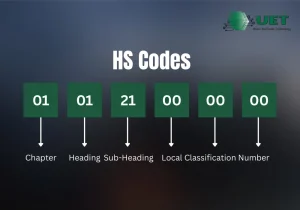
The HS Code for bare printed circuit board is 8534.00.00. This code is applicable only when there are no electronic components mounted on the PCB. It applies only to empty or unpopulated boards. Once you add the components, the classification may change.
The code is typically divided into different logical parts. The first digit, 85, represents electrical machinery and equipment. The next two digits, 34, specifically refer to printed circuits. The last four digits, 00.00, indicate the standard category without further subdivision. During international trade, these patterns help in clearing customs.
How to Classify
When preparing the HS code for your PCBA, you must carefully determine every digit. You can never classify it based only on chips, resistors, or connectors. Instead, you need to consider its overall function, product category, and specific requirements.
Identify the Main Function
First, understand what your PCBA is actually used for. The main function will determine which HS code you should use. Always focus on the purpose of the complete PCBA assembly.
Choose the Correct HS Category
After determining the function of your PCBA, you need to find the correct chapter in the HS list. Do not focus only on components like chips, resistors, or connectors. Instead, consider the complete PCBA assembly.
For example, microcontrollers may fall under HS code 8542.31.00. Switch or relay assemblies may fall under 8536.90.00. Measuring or testing equipment may fall under 9030.89.00. On the other hand, computer parts and modules may fall under 8473.30.20.
Country Specific Needs
In most countries, a 6-digit HS code is commonly used. However, in some countries, it is extended to 8 or even 10 digits. For example, the United States uses a 10-digit HTS code for more detailed classification.
Use official sources
You can also check your government customs website. There is official information in the tariff database. These sources are updated every day, so you can get accurate data.
Consult Experts If Necessary
If you are still unsure about how to decide the HS code, you can contact a customs broker. You can also look for a trade compliance expert. Although professional advice is expensive, it can save time and penalties.
Step-By-Step Classification
There is a clear and logical process for determining the HS Code for PCBA. You should not rely on guesswork. Instead, follow the correct method step by step. This will help you reduce mistakes and avoid complex customs issues.
Step 1: Analyze the PCBA Components
First, review all the components used in your PCBA. Check ICs, connectors, relays, sensors, and power modules. Identify whether the PCBA is fully assembled or partially assembled. This component review will give you a clear, basic understanding of the product. However, you must not determine the HS code based only on the components.
Step 2: Find out the Primary Function
After completing the component analysis, determine the primary function of your PCBA. Will it be used in telecommunication, computing, or power management? In most countries, customs authorities classify products based on their primary function. Therefore, identifying the main purpose is very important for correct HS code selection.
Step 3: Refer to the HS Code
After analyzing the components and function of your PCBA, check which chapter of the HS code list your product falls under. Start from the correct section, such as electrical equipment or electronic assemblies. Compare your product details with the official HS descriptions. Finally, select the most suitable HS code that matches your PCBA.
Step 4: Consider the Special Features
Next, consider the special features of your PCBA. Does it provide wireless functionality? Or is it used in medical equipment? Unique characteristics like these can influence how the product is classified and may affect the HS code selection. Always account for these details when determining the correct code.
Step 5: Review Country-Specific Rules
Finally, confirm the full HS or tariff code specified by the importing country. As mentioned before, some countries extend the HS code up to 8 or 10 digits. Therefore, always verify with official customs database.
Common HS Codes for PCBA
| 8537.10.19 | PCBA that mainly contains ICs |
| 8537.10.20 | PCBA that contains separate resistors, capacitors, and transistors |
| 8537.10.30 | PCBA for control boards |
| 8537.10.90 | More general type of PCBA that may not be included in the above types. |
Frequently Asked Questions
What can go wrong when HS codes are incorrect?
Using the wrong HS code can create major problems. For wrong codes, customs officers may hold your shipments for weeks. Besides, you might end up paying the wrong taxes, which can lead to heavy fines. In particular cases, customs even seize your products. Consequently, your business reputation can be hampered, and you are likely to experience delivery delays. Always double-check the codes.
How to Find the Correct HS Code for Electronic Parts?
To find the correct HS code, start by identifying the function of your part. Look at the machine; it powers devices such as mobile phones and computers. In this case, check the official HS database chapter 85. You may also use online search tools or get help from your suppliers. When you are in doubt, you may ask for a ruling from customs as well.
Conclusion
For any electronics company, classifying a PCBA is an important step. Finding the right HS code ensures your parts clear customs without any problems. Also, remember that the code changes whether the board is bare or populated. Always think about the final product here.
Accurate codes help you avoid paying costly taxes or fines. It also eliminates the risk of delivery delays to protect the business’s reputation. If you are unsure, consult your supplier or a customs expert.