
After designing and bringing up a successful prototype, your next step could be to scale up for mass production. There are sizeable differences between preparing for a prototype build versus preparing for mass production. It’s important not to get overwhelmed with the process and plan. What’s good is that UET PCB (https://uetpcb.com/turnkey-pcb-assembly/) has a turn-key solution for this and will guide you all the way. Here, you will learn 7 steps to scale your PCB assembly for mass production smoothly.
The 7 Steps to Scale Your PCB Assembly Smoothly
1. Make your Board DFM (Design for Manufacturability) and DFA (Design for Assembly) Ready
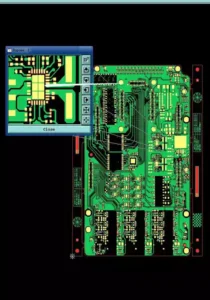
One of the main differences between a prototype and a mass-produced board is that the latter is DFM-ready. This difference means the fabricator should not have issues producing them at scale. You’ll be able to fabricate your boards faster if you design your products with DFM in mind from the start. Here are some DFM guidelines for making or assembling a PCB:
- All PCB tracks, when bent, should avoid sharp bends. Angle to 90°
- The SMD pad should have a solder mask expansion of at least 0.1mm.
- Same SMD components that are close to one another should ideally be aligned so that a pick-and-place machine can place them faster.
- The minimum L/S of all tracks should be followed
- The minimum via size (drill vs. pad diameter) should be followed
- Ensure enough clearance of traces and components from the board edge
- Minimum track-to-track, via, track-to-hole, via, etc. spacing should be followed
- Other PCB or assembly requirements…
2. Prepare to Scale-up Together with your Component Sourcing
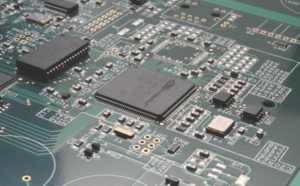
Component sourcing is, in itself, a broad area to look into. There are several component distributors with varying prices for different quantities. However, you’ll need to look into the End of Life (EOL) dates for your components to ensure they align with your expected product life cycle. If not, you may encounter product re-spins along the way that can be costly for your company.
It’s also best to keep a database of your BOM along with several available distributors for your components. You’ll never know, you might need a fallback in case one distributor fails to deliver your items.
Another thing to consider is to know if its worthy to buy from a separate distributor or having your fabricator do the sourcing for you? It might be more practical or cheaper to have your fabricator source it, though you can always mix the two.
3. Perform all necessary testing on your Boards Before Scaling up.
Your prototype will need EVT (Functional/Parametric), DVT (Mechanical, Environmental, and Compliance), and PVT (Product Validation) to proceed for mass production. Without this, you may end up selling untested and defective hardware to your customers. This situation may damage your company’s reputation. Below are some of the usual EVT, DVT, and PVT procedures.
1. EVT (Engineering Validation Test)
EVT should perform all functional, programming, and parametric testing. This test determines if all design parameters were met. Example EVT processes are:
- Power-up and Reset parameter tests
- Power parameters tests
- I/O and communication tests
- All functional tests
- Firmware/Software programming tests
2. DVT (Design Validation Testing)
DVT will determine whether your design meets regulatory compliance and is fit for its intended environment. The test also verifies if all mechanical measurements are correct. Examples of DVT processes are:
- Compliance/Regulatory Testing
- EMC (Electromagnetic Compatibility) test
- Mechanical / Cosmetic test
- Thermal cycling
- Vibration test
- Drop test
4. PVT (Product Validation Test)
PVT is one of the most important processes in scaling up your product. This test will determine whether all mass-production processes run smoothly without issues. In PVT, you must prove that the manufactured units are free of issues. Such processes as:
- Small pilot production runs
- SMT and Manual assembly validation
- ICT (In-circuit test) / FCT (Functional Circuit Test)
- Packaging/Labeling
- Taking into account overall yield, failure rates, and rework rates
5. Build a Test Group for your Production Line
If design engineers build and test a product as a prototype, a separate testing group (manufacturing test engineers) can test the production line. These people ensure that the product can be built, tested, and mass-produced. They bridge the gap between R & D and scaling up your product. With this, the test group should be familiar with equipment and processes such as:
- ATE or Automated Test fixtures
- Boundary scan / JTAG
- ICT (In-circuit Test)
- FCT (Functional Circuit Test)
- Environmental test setups
- Test measurement and calibration equipment
6. Build a Quality Assurance (QA) Group
The QA group can be likened to internal affairs in law enforcement. However, QA deals with product quality and procedural integrity rather than human behavior and procedural integrity. QA inspects if all quality control procedures are followed. This group also delves into documentation and control. You’ll usually see them maintain:
- Control Plans
- Traceability records
- Non-Conformance reports
- Corrective and Preventive Action reports
- Calibration logs
- Test procedure Records
- Work Instruction documents
- Inspection Standards
7. Optimizing for Long-Term Scalability
You can now optimize your systems and processes after having successfully made your first scaled production run. This process means improving procedures. Usually, you have to work with the entire team to be able to:
- Optimize your BOM by identifying cost-effective alternatives.
- Optimize the assembly process by talking with the manufacturing team
- Monitor products in the field by looking for failure rates.
- Ask vendors for volume pricing to optimize the product’s overall cost.
Conclusion
Successfully bringing a product to market is only the gateway to scaling into mass production. You’ll have to prepare and organize a team that can scale your PCB assembly smoothly. In addition, specialized equipment is also necessary. Once you’ve finished your first production run, you should optimize all the processes for long-term scalability. Only in this step will you remain competitive in the electronic manufacturing industry. UET PCB is a supportive PCB/PCBA fabrication company that can help you scale your production line.