
You might have noticed that the electronic devices are becoming smaller and smarter day by day. This smart design demands such a circuit board that can fit into the tight space. But traditional large PCBs often fail here due to their inflexibility. That’s where the flexible PCB comes into play. They are smarter, bendable, and lightweight solutions for today’s modern devices. But if you are new to these PCBs, they might feel confusing at first. But worry not! This guide on flexible PCBs will clear everything. You will know how it works and its uses across various industries. So let’s get started.
What is a Flexible PCB?
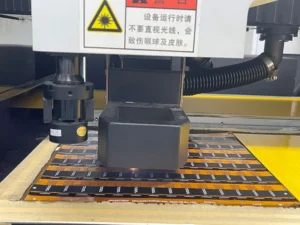
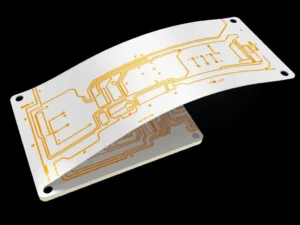
A Flexible PCB (Flexible Printed Circuit Board) is a type of circuit board that can easily bend, fold, or twist without risk of breaking. Unlike old rigid PCBs, it is made from polyimide rather than hard fiberglass, which provides flexibility. It also contains copper pathways that carry electrical signals between electronic components.
So it is the flexibility of these PCBs that makes them stand out in modern devices. Years ago, electronic products were larger and had enough space for rigid circuit boards. But today, manufacturers pay special heed to making devices smaller, thinner, lighter, and more powerful. For such devices, the old large PCBs were not a good option due to their extra connection.
That’s where manufacturers now move toward flexible PCBs. They are so flexible that they can bend to fit the device’s shape. With these PCBs, there is no need to use multiple rigid boards connected by many wires. Instead, a single flexible PCB does the same job by occupying less space. This not only reduces the size and weight of a product but also improves reliability.
Some Common Applications of Flexible PCB
Today, flexible PCBs have become a necessity for modern devices. That’s why almost every industry relies on them to achieve smart design, complex wire connections, and flexibility. But who are the main users of these PCBs worldwide? Let’s discuss its common applications below.
1- Consumer Electronics
One of the biggest uses of flexible PCBs is in consumer electronics. As you know, your smartphones, tablets, laptops, smartwatches, and digital cameras are very small. At the same time, these smart devices offer more features. To make this possible, manufacturers need circuit boards that can fit into very limited spaces. That’s why they use flexible PCBs that allow circuits to bend around batteries, screens, cameras, and other components. In this way, there remains no need to separate wires inside the device.
2- Automotive Industry
Modern vehicles rely heavily on electronic components more than older ones. For example, the safety, navigation, entertainment, and lighting systems all use electricity. But these systems are installed in areas with limited space or constant vibration. For such uses, flexible PCBs are ideal as they can fit into compact spaces and withstand movement without breaking. In automotive, you can often find them in dashboard displays, touch controls, cameras, and sensors.
3- Medical Devices
The healthcare industry depends on electronic devices to monitor, diagnose, and treat patients. Gone are the days when these medical devices were large and unportable. But now manufacturers have made them smarter and lighter for easy wear and carrying. Inside these wearable health trackers, imaging equipment, and hearing aids, the PCB is the most important part.
4- Aerospace and Aviation
Weight and reliability are the two most critical things in aerospace and aviation. Even a small reduction in weight is important for enhancing fuel efficiency. The main systems in the aerospace industry contain electronic devices that must be smart and operate reliably. Both these things are achieved by a flexible PCB. Their lightweight design reduces the weight of control, monitoring, and navigation systems.
5- LED Lighting Systems
Lastly, you will also find flexible PCBs in the LED lighting systems. LED light, especially strip light, must be bent to fit into different shapes. There, the hard PCB would be useless, as it could break. That’s why manufacturers generally install flexible PCBs in almost every LED light. They allow the lights to bend easily around corners and help designers create different lighting styles.
Factors to Consider When Choosing a Flexible PCB
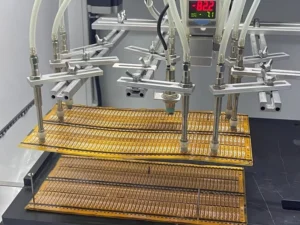
As you can see, the flexible PCBs come in different designs. Those designs are made to fit different applications. So how would you choose the right one for your electrical project? Confused? Worry not! Here are some factors to consider when choosing a flexible PCB.
- Application Type: First, you must know where you want to use the PCB. If that’s a simple device, you should choose a basic flexible PCB design, such as a single-sided one. However, for modern devices, you will need an advanced flexible PCB, such as a double-sided one.
- Flexibility Requirement: Not all flexible PCBs need to bend in the same way. Some only need to bend once during installation. However, some are bent repeatedly during use. To understand how often you need PCB bending, choose the flexibility level accordingly.
- Electrical Performance: Different devices need different levels of electrical performance. Right? Now determine whether your device needs simple signals or fast, stable signal transmission. After that, choose the flexible PCB design and material that can handle your electricity level.
- Cost and Budget: Lastly, when selecting the flexible PCB, keep your budget in mind. The cost of each PCB varies with its design, materials, and advanced features. So if you are on a tight budget and want a flexible PCB for a regular device, then go for a cheaper one. However, for critical and more advanced devices, you have to spend on a costly PCB.
Conclusion
Flexible PCBs have become must-haves in modern electronics. They are known for their smart, lightweight design that fits in today’s small devices. What makes them special is their ability to bend and fit into tight spaces. So there is no need to use multiple PCBs with them, as this flexible one does the entire job in that small size. However, these flexible PCBs mainly come in two types. The first one is single-sided, with copper pathways present only on one side.
This is a simple type that offers less flexibility and is well-suited to simple devices. The second is a double-sided flexible PCB with copper layers on both sides. That’s an advanced design with more flexibility for additional connections. Before choosing a flexible PCB, you must consider the factors I mentioned in the last section. This section will help you choose the right PCB for your custom products.