
Deciding on what procurement type to use for your PCB manufacturing? Look here to see if you need a turnkey or consigned type PCB assembly process.
After completing your design and preparing for mass production, you may ask: How do I continue sourcing the materials for my products? Should I let my PCB manufacturer source my components, or should I handle sourcing myself? These are questions this article can help you with. Here, you’ll find the advantages and disadvantages of using a particular PCB assembly process. For your information, UET PCB is a leading electronics manufacturer that offers both turnkey and consigned PCB assembly services.
Getting your PCBs Manufactured and Assembled
You usually send your Gerber, BOM, Pick-and-Place file, or assembly drawing to your PCB manufacturer. Nowadays, it’s really cheap to get your PCB manufactured overseas. Surely, your PCB manufacturer can fabricate your boards. However, you have to decide on how to source your components. Not every PCB fabricator can handle component sourcing.
If you do want to include component sourcing with your PCB fabrication and assembly, it’s a good idea to look for companies that offer Electronics Manufacturing Services (EMS). EMS provides several additional services, such as supply chain and logistics, testing, and QA, to name a few. These companies are not just limited to PCB fabrication. More importantly, these providers can do an end-to-end electronics manufacturing workflow.
If you do decide to only go with PCB fabrication and assembly, you have to check your supply chain when choosing components. You’ll have to check the cost vs. benefit ratio, as sourcing components is not a trivial task. Hiring a component engineer can help you in the process and can be beneficial for the company.
What is a Turnkey PCB Assembly?
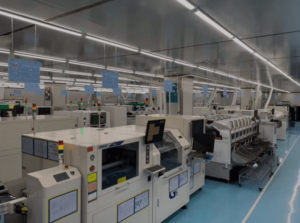
In a turnkey PCB assembly, your fabricator will handle most of the electronics manufacturing workflow, including fabrication, assembly, component sourcing, and even testing. This process will ease the burden on customers completing their electronic projects. With this, you’ll need to provide your fabrication, BOM, assembly files, and/or test procedures. However, it’s still your duty to choose the right components from your manufacturer. It’s important to choose a trusted PCB fabricator (such as UET PCB) so that you’ll get quality and non-counterfeit parts. If you ever want to include testing, every process should also be relayed to them. You may provide functional testing fixtures, while your manufacturer can set up their own assembly and testing fixtures as well.
What is a Consigned PCB Assembly?
The customer buys the components and ships them to the manufacturer in a consigned PCB assembly. Usually, you’ll have to sign a terms-of-service agreement with your manufacturer regarding the process. You may incur additional up-front charges, such as labor and setup, for preparing your components for manufacturing. Additionally, be prepared to add extra components to address errors encountered during assembly.
Turnkey PCB Assembly Characteristics
Advantages
● Faster turnaround time for projects
● Simplified Workflow: The customer does not have to deal with the hassles of sourcing from different suppliers.
● Cost savings if the fabricator sources components in bulk quantities
Disadvantages
● The customer does not have full control of component selection, especially from international sources.
● Sometimes, some components may be more expensive than what external suppliers can offer.
● The quality and reliability of the components rely on the manufacturer’s supply chain resources. Hence, it is the responsibility of the manufacturer to obtain genuine parts of good quality.
With these characteristics, turnkey PCB assembly is best suited for rapid prototyping or for projects where fast deployment is needed.
Consigned PCB Assembly Characteristics
Advantages
● The customer will have the flexibility in choosing components from different suppliers.
● The customer can use their own stock parts
● Ability to choose specialized components for special applications
● Can be less expensive if the customer has a strong supply chain
● Strict component sourcing for military, medical, or aerospace applications
Disadvantages
● The customer will have to coordinate logistics and component handling themselves.
● Some consigned parts may be more expensive than their overseas/asian counterparts.
● Much slower PCB manufacturing workflow
● Can get more expensive due to additional labor and setup costs during assembly.
● The customer must purchase extra components to compensate for assembly or manufacturing errors.
With these characteristics, consigned PCB assembly is best suited for customers with a solid supply chain, specialized components or applications in the military, aerospace, or medical fields, or an adequate stock of components.
Relevance this 2026
With growing geopolitical tensions and global semiconductor competition, choosing the right PCB assembly process is critical. More and more companies may lean towards consigning PCB assembly parts, especially for critical components or specialized applications. However, it’s not feasible to do everything with consigned PCB assembly, as the cost savings from outsourcing components are significant.
As a result, more and more companies are diversifying their supply chains. The more common approach is to do a hybrid of turnkey and consigned PCB assembly. Another approach is to turn on passive and connector components (that will save a lot on cost) while consigning critical or specialized components. This process is commonly referred to as a hybrid approach. UET PCB can be your partner in turnkey, consigned, or even hybrid PCB assembly.
Conclusion
Turnkey PCB assembly manufacturers fabricate and assemble your boards while sourcing components in-house. This process is best suited for rapid prototyping and fast PCB workflow production. On the other hand, consigned PCB assembly only fabricates and assembles the boards while the customer sources the components. This process is best suited for specialized applications or for customers with a robust supply chain. Both PCB assembly processes have their advantages and disadvantages, and it’s up to the customer to decide which process best fits their needs. UET PCB can cater to both turnkey or consigned (or even a hybrid approach) and will best serve the interests of the customer.